
SKIN CONDITIONS
Melasma
Persistent pigmentation is more than excess melanin.
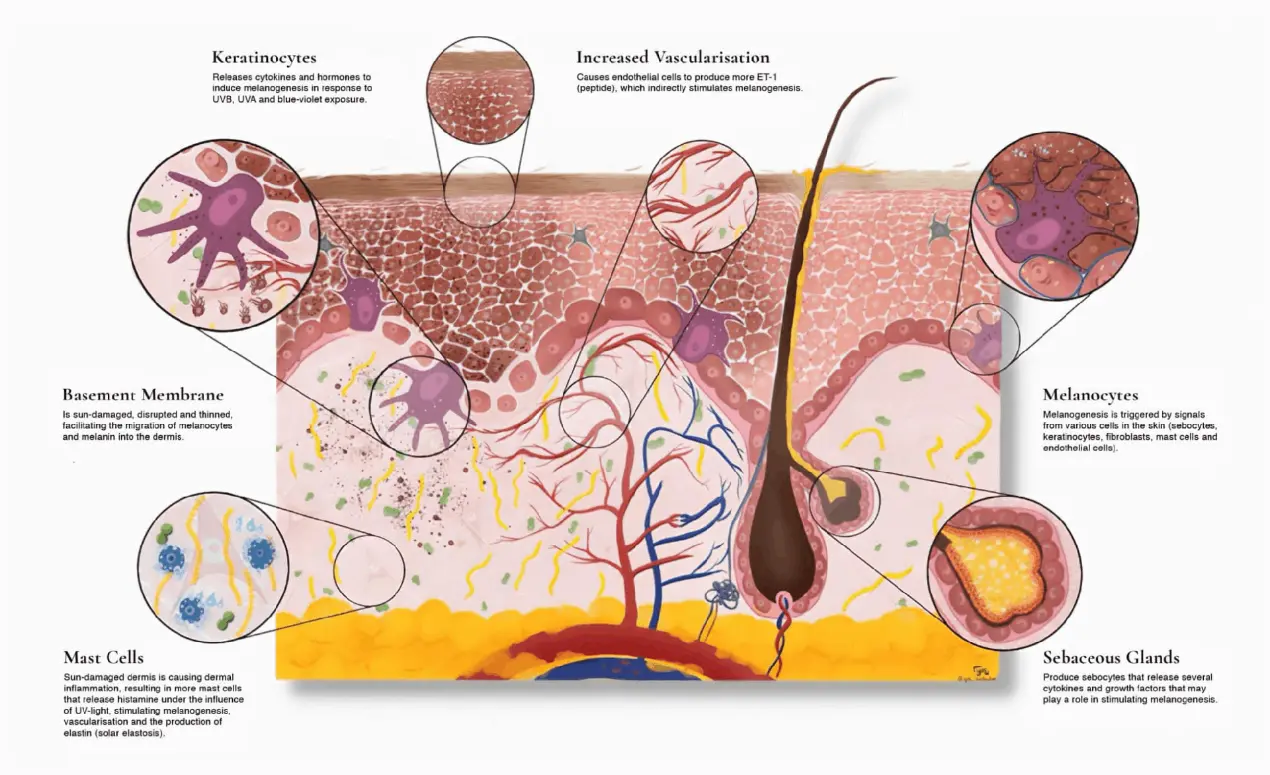
Melasma involves inflammation, oxidative stress, barrier dysfunction, vascular signaling, visible light exposure, and skin microenvironment changes.
Understanding these pathways is essential for long-term management.
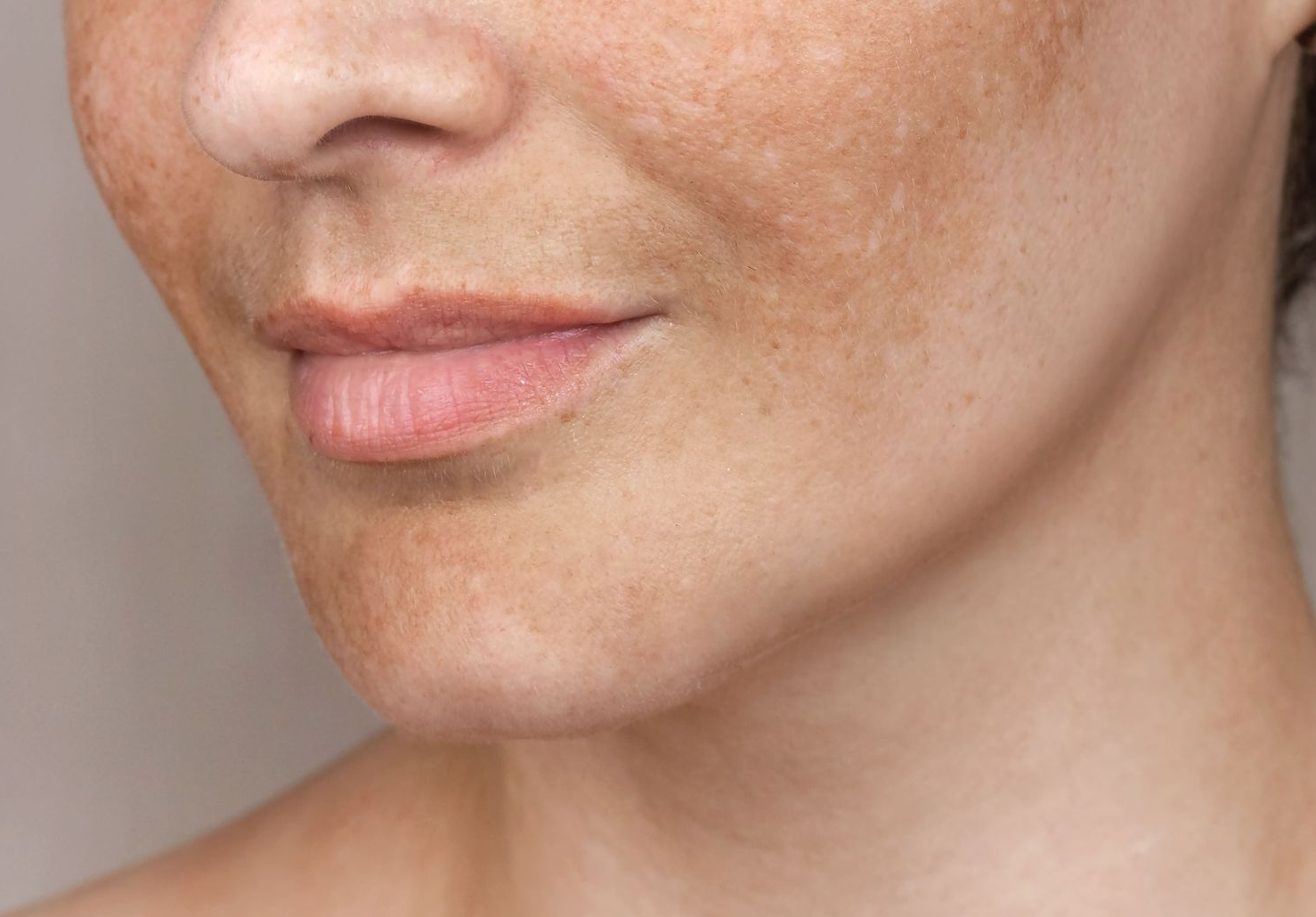
What is Melasma?
Rekam evidence mencakup klaim, produk, jenis studi, parameter, durasi, subjek, instrumen, investigator, lokasi, tanggal, redaksi yang disetujui, dan status review. Ditinjau di bawah DKE Dermatology Advisory Board.
Melasma is more than melanin.
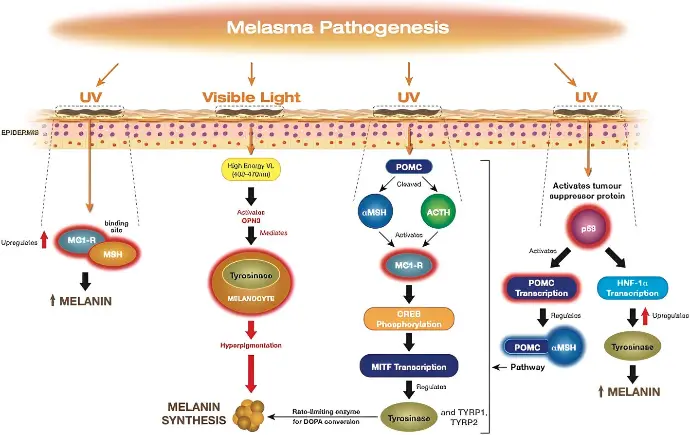
Current evidence suggests that melasma involves a complex interaction between pigmentation pathways, inflammation, oxidative stress, skin barrier dysfunction, and environmental exposure.
These interconnected mechanisms help explain why melasma often persists and frequently recurs.
Biological Drivers
- Oxidative Stress
- Chronic Inflammation
- Barrier Dysfunction
- Visible Light Exposure
- Skin Microenvironment Changes
- Vascular Signaling

Why Recurrence Happens
Fading pigment does not always mean the biology has stopped. Even after pigmentation improves, many biological triggers remain active beneath the surface.
Without ongoing support, recurrence becomes part of the disease cycle.
Common Drivers of Recurrence
- Persistent UVA1 exposure
- Visible light exposure
- Oxidative stress
- Chronic inflammation
- Barrier disruption
Why Treatment Often Fails
Many therapies successfully target pigmentation.
Far fewer address the biological environment required to sustain results.
Common Challenges:
- Insufficient Photoprotection
Daily exposure continues to stimulate pigmentation pathways.
- Barrier Intolerance
Irritation and discomfort reduce treatment tolerance.
- Poor Adherence
Patients discontinue therapy before meaningful improvement occurs.
- Single-Pathway Intervention
Addressing only melanin production often leaves other drivers untreated.
The Skin Protocol Approach
Better outcomes require complete systems.
Modern melasma management requires more than depigmentation alone.
Skin Protocol approaches melasma through four interconnected pillars designed to support both treatment performance and long-term tolerability.
Correct
Target excessive melanogenesis through multiple biological pathways.
Repair
Support barrier resilience and improve treatment tolerance.
Renew
Encourage controlled epidermal renewal with improved comfort.
Protect
Reduce environmental triggers associated with pigmentation recurrence.
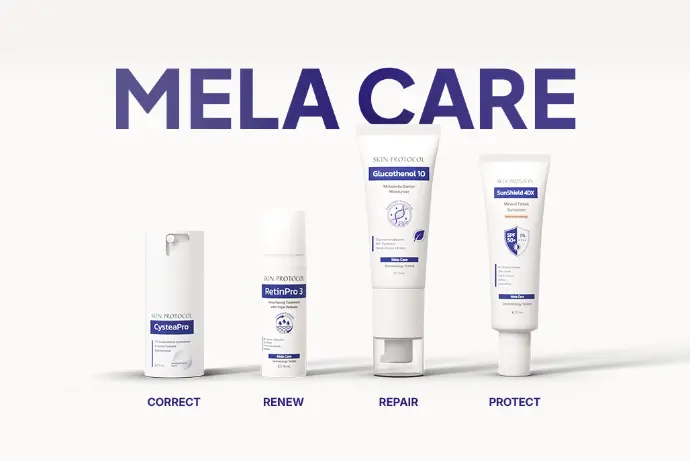
Empat fase yang terkoordinasi
Setiap produk memiliki peran yang jelas dalam urutan.
Rutinitas AM & PM
- Bersihkan dan keringkan kulit
- CysteaPro — kontrol pigmen
- Glucothenol 10 — dukungan barrier
- SunShield 4DX — proteksi cahaya
- Bersihkan dan keringkan kulit
- RetinPro3 — pembaruan & clearance
- Glucothenol 10 — dukungan barrier
Perkiraan timeline
Pengenalan bertahap, fokus pada toleransi dan kenyamanan barrier.
Protokol penuh; perbaikan biasanya terlihat pada rentang ini.
Proteksi dan dukungan barrier untuk menurunkan risiko kambuh.
Clinical evidence
Evaluasi produk tunggal 12 minggu (n=20), pengukuran instrumental.
Lihat evidenceToleransi & panduan keamanan
- Perkenalkan langkah aktif secara bertahap untuk mendukung toleransi.
- Pertahankan dukungan barrier sepanjang regimen.
- Proteksi cahaya harian penting untuk menurunkan kekambuhan.
- Sesuaikan dengan dokter bila terjadi iritasi.
Siap memulai protokol?
Pasien: temukan klinik. Profesional: minta resource dan sampel.